



Introduction
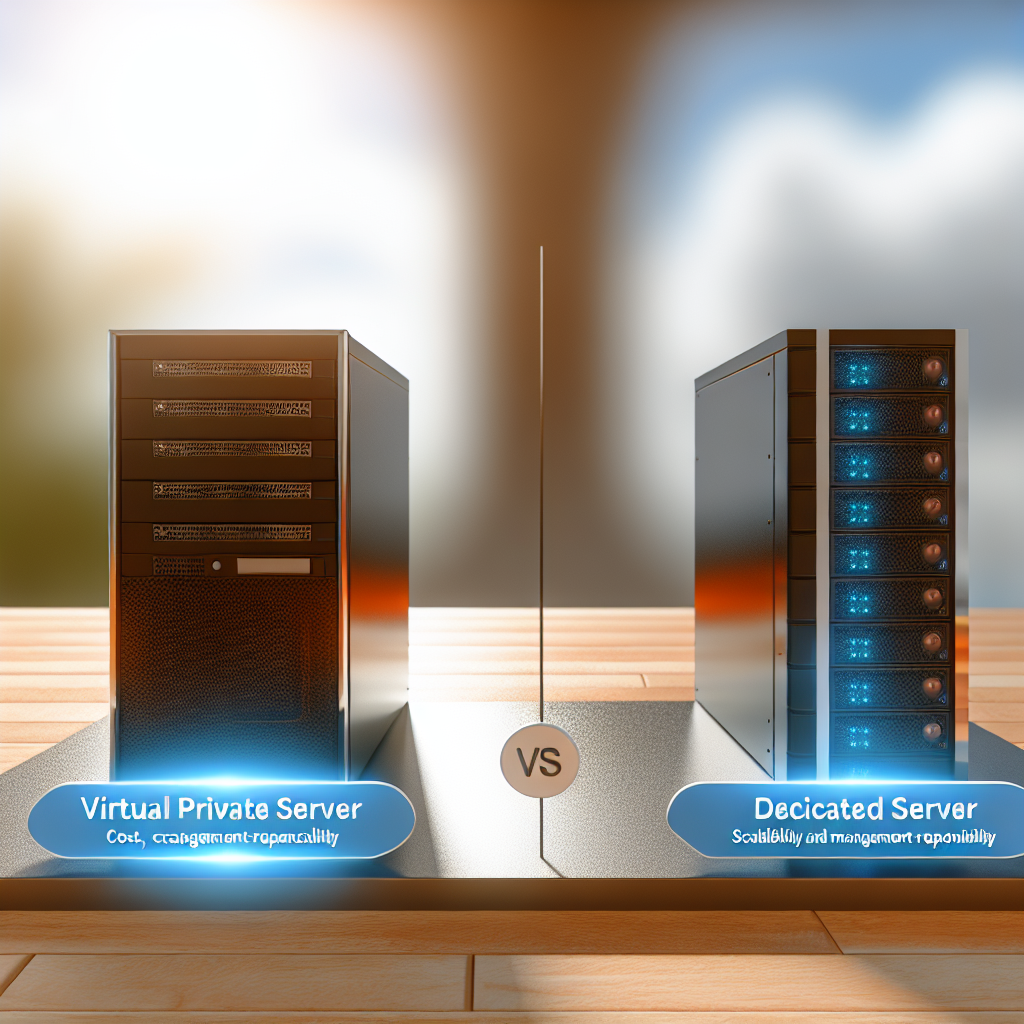
In the ever-evolving landscape of web hosting, choosing between Virtual Private Servers (VPS) and dedicated servers for your organization’s needs in 2026 requires thoughtful consideration. As businesses and websites grow, understanding the core differences—resource allocation, performance, cost, management responsibility, and scalability—becomes crucial in making an informed decision. In this comprehensive comparison, we’ll explore these key aspects, delve into use cases for each option, analyze the middle ground of high-resource VPS versus entry-level dedicated servers, and examine modern VPS capabilities that have narrowed traditional gaps. Additionally, we’ll provide a decision-making framework based on specific requirements and budget considerations.
An In-depth Look at Resource Allocation and Performance
Resource allocation and performance are pivotal considerations when comparing a VPS to a dedicated server. A Virtual Private Server partitions a physical server into multiple virtual servers, each with its own set of dedicated resources. This ensures isolation between users, offering a balanced approach to resource management. However, since multiple VPS instances share the same physical hardware, peak-time performance may vary.
In contrast, a dedicated server provides an entire physical server to a single user, ensuring maximum resource availability. This often translates to superior performance, especially for resource-intensive applications. Dedicated servers offer predictable workloads and high-level performance control, making them suitable for demanding tasks such as big data processing and gaming servers.
Comparison Table: Resource Allocation & Performance
- VPS: Shared CPU, defined RAM allocation, typically SSD storage, moderate to high performance
- Dedicated Server: Dedicated CPU, maximum RAM, HDD or SSD options, high to ultrahigh performance
Cost and Management Responsibility
The financial aspect and management requirements play a significant role in the decision-making process. VPS hosting is generally more cost-effective due to resource sharing. It caters to small to medium businesses that need good performance without the hefty price tag of owning a dedicated server. Additionally, management responsibilities are usually less demanding. Providers often offer managed VPS services, covering server maintenance, security updates, and performance tuning.
Dedicated servers, however, come with a higher upfront and ongoing cost, justified by exclusive resource usage. This option is suitable for businesses that require specific hardware configurations and have the technical expertise to manage the server in-house or the budget for managed services.
Cost-Benefit Analysis
- Small Scale: VPS offers substantial savings, suitable for startups or small websites.
- Medium to Large Scale: Dedicated servers provide better ROI for high-traffic websites or applications.
Scalability Considerations
Scalability is essential as your business grows. In recent years, modern VPS capabilities have improved significantly, offering enhanced scalability through cloud integrations. This allows quick adaptation to increasing traffic or storage needs without substantial downtime.
Despite this, the dedicated server remains the king of scalability when handling massive growth with custom hardware needs. While it necessitates manual upgrades or hardware replacements, dedicated options provide unmatched power for enterprises with specific scalability requirements.
High-Resource VPS vs. Entry Dedicated Servers
With advances in VPS technology, high-resource VPS often competes closely with entry-level dedicated servers. The middle ground offers scalable CPU, RAM, and storage options without the need for a dedicated server’s complete resource allocation. This blend is ideal for intensive projects without extensive customization requirements.
Entry-level dedicated servers, however, provide unique advantages such as complete control over the server environment and more predictable performance, often outpacing even the highest-tier VPS in hosting critical applications.
When to Upgrade to Dedicated Servers
Recognizing the signs to move from a VPS to a dedicated server is crucial for seamless growth. If your business experiences slowdowns during peak traffic, exceeds resource limits frequently, or requires specific setups not supported by VPS technology, it’s time to consider a dedicated server. The upgrade not only boosts power and customization but also supports future expansion needs.
Provider Options and Migration Considerations
Numerous hosting providers cater to both VPS and dedicated server needs. Among the popular options are AWS, Google Cloud, DigitalOcean for VPS, and LiquidWeb, OVH, and HostGator for dedicated servers. Before migrating, evaluate factors such as data transfer, potential downtime, and compatibility to ensure a smooth transition.
Case Studies: Real-World Applications
Several organizations provide insights into VPS and dedicated server use:
- Startup A: Utilized VPS for scalable, cost-effective solutions during initial growth stages. Transitioned to dedicated servers as enterprise-grade requirements emerged.
- Enterprise B: Leveraged high-resource VPS for regional offices, maintaining cost efficiency coupled with centralized management across global locations.
These cases illustrate how hosting solutions align with company objectives and technological demands.
Conclusion
Choosing between VPS and dedicated servers in 2026 involves evaluating various aspects such as resource needs, cost implications, scalability requirements, and management capabilities. VPS offers economical, flexible solutions for growing ventures, while dedicated servers deliver performance and customization for large-scale, critical applications. Understanding when your organization has outgrown a VPS and needs the reliability of a dedicated server can make a significant impact. By assessing your company’s needs and objectives, you can confidently decide on the most suitable hosting solution for your business growth in the dynamic landscape of technology.